Commercial painting is not just a bigger version of a residential job. The scale changes, but so does almost everything else: the scheduling pressure, who needs to be kept in the loop, and what “done right” actually means for a property that has to keep functioning the whole time. Here is what to expect if you are managing a commercial property or running a business and a paint project is on the calendar.
The schedule usually matters more than the price
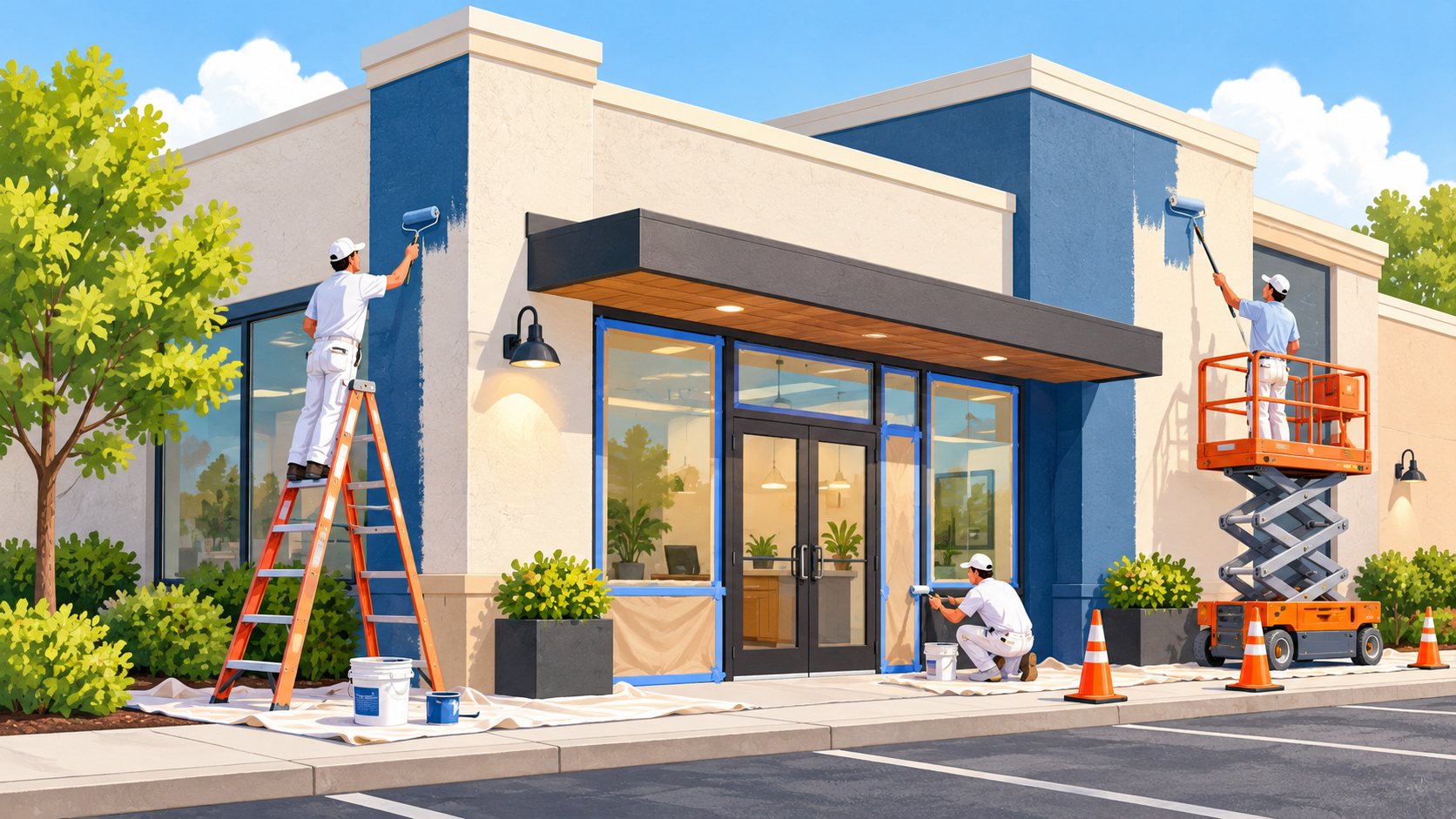
A homeowner can work around a crew for a week. A retail space, an office building, or an HOA common area usually cannot close down. That is why commercial painting is planned differently. Most commercial work gets planned around your business hours, not ours: early mornings, evenings, weekends, or phased section by section so the property stays usable the whole time.
Before any quote is final, we want to know your actual constraints. Tenant move-out dates, business hours, resident meetings, whatever governs your calendar governs ours too.
Multiple stakeholders means multiple approvals
A homeowner makes one decision. A commercial project often has a property manager, an HOA board, a business owner, and sometimes a landlord, all of whom may need to sign off on color, timeline, or scope before work starts. We build extra communication into commercial projects specifically because of this. A clear, written scope of work matters even more here, since it is often being reviewed by people who were not in the room when the estimate was discussed.
What a commercial-grade job actually includes
The core process, prep, priming, application, is the same discipline as residential work. What changes is what you should expect included in the scope:
- Coordination with building management or on-site staff, not just the person who signed the contract
- Protection of common areas, walkways, and any areas with ongoing foot traffic during work
- Compliance with any HOA-specific color or material requirements
- A plan for signage, entrances, or parking areas affected during the work
- Liability documentation appropriate to a commercial job, not just a homeowner policy, plus a license you can check on the CSLB website
If a bid does not address these, ask directly; our guide to comparing painting estimates lists what a complete bid should cover. A contractor who has done real commercial work will already have answers.
Getting an accurate commercial estimate
Commercial estimates take a little longer to put together correctly, because there is more to account for: access logistics, business hours, multiple buildings or units, and sometimes phased billing tied to project milestones. That extra time upfront is what prevents scope surprises once work is underway.
If you are a property manager or business owner planning a project, come to the estimate with your real constraints already in mind: hard deadlines, tenant considerations, and who actually needs to approve the final decision. The more of that we know at the start, the more accurate the plan we can build around it. We take on commercial work across the East Bay, from Walnut Creek and Concord to San Ramon.