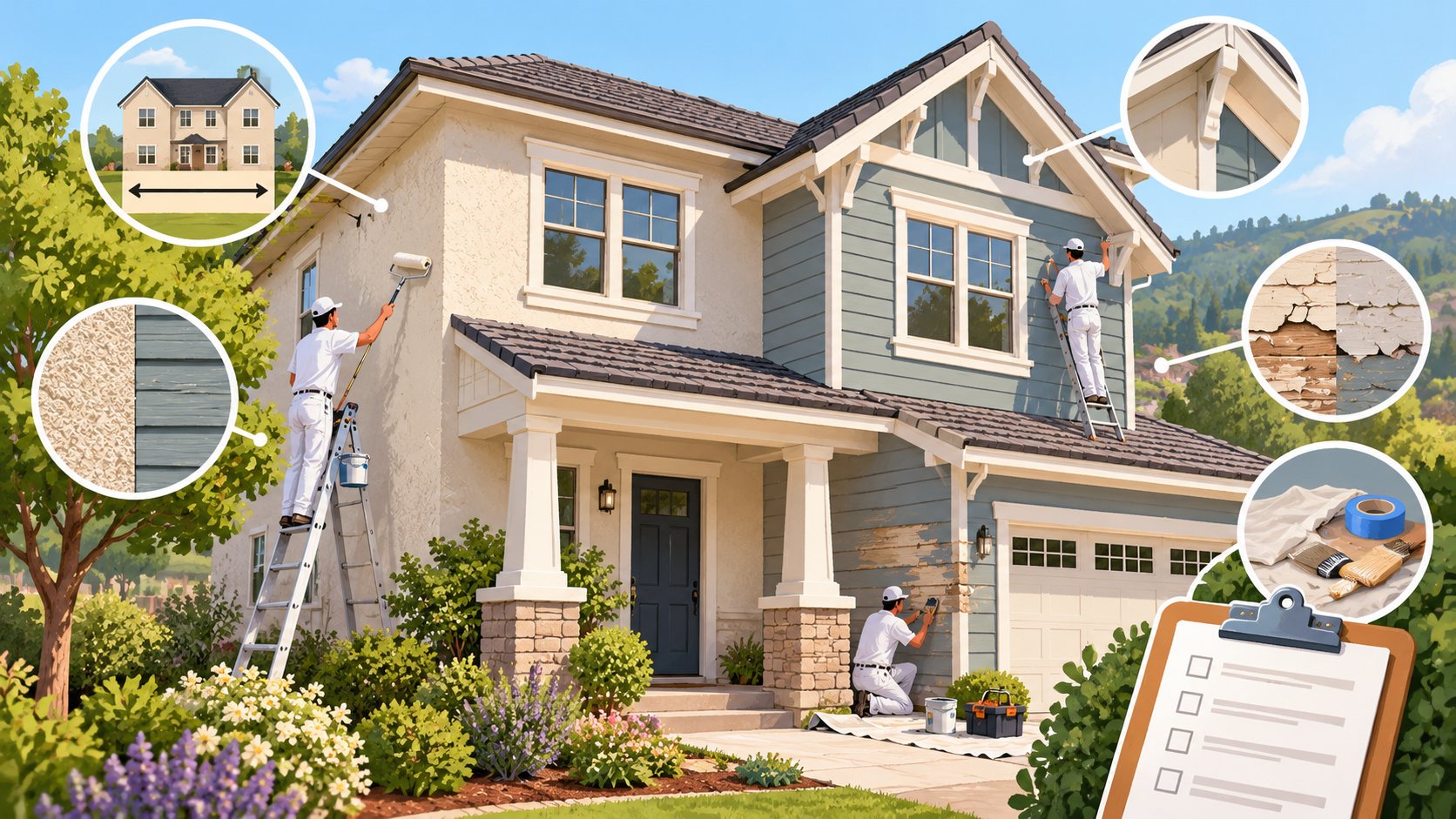
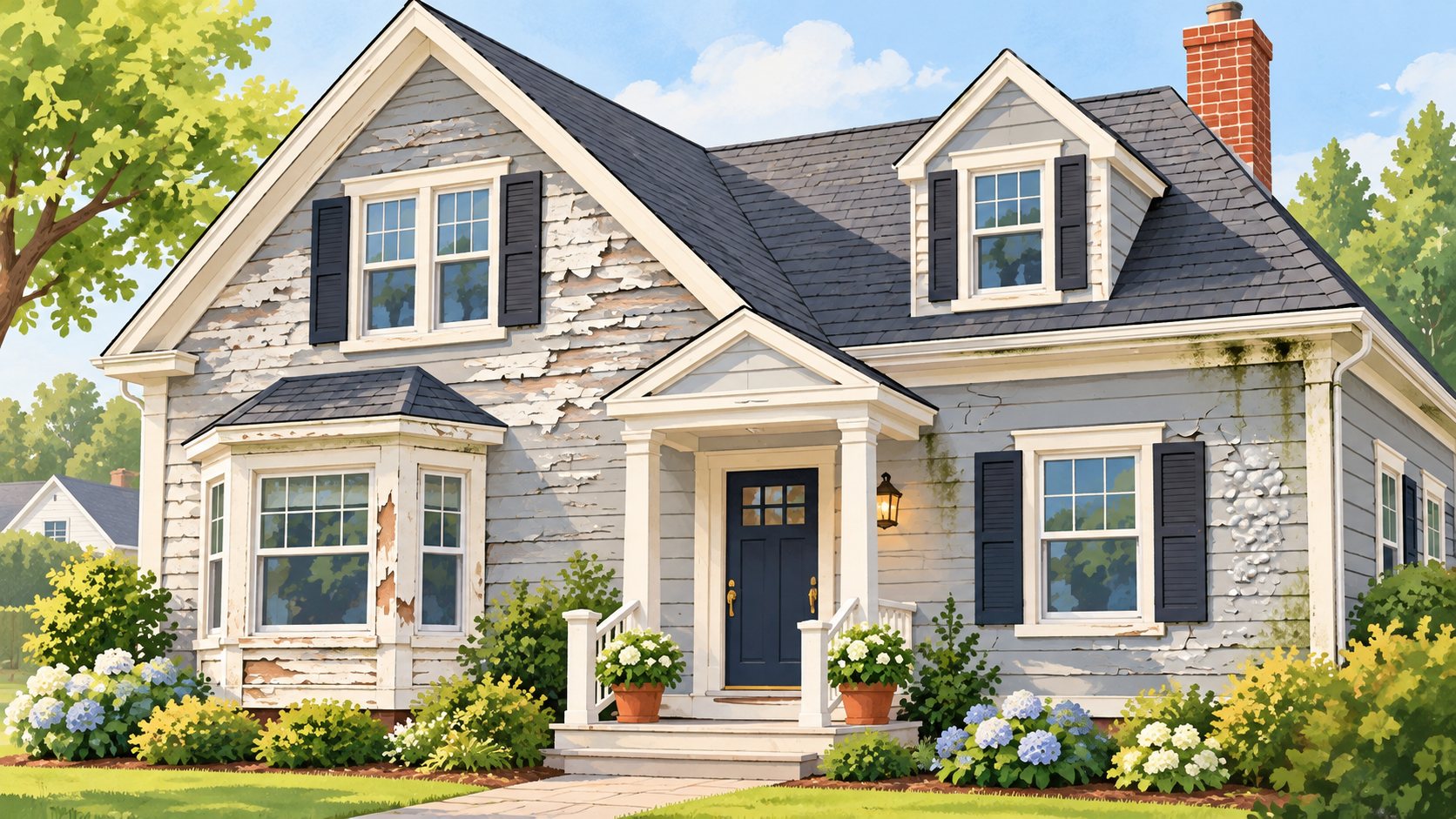
When a homeowner in Concord calls me about the outside of their house, the question is usually the same: “Does it need paint, or is something wrong?” Usually the paint itself is telling you the answer. Each kind of failure has its own look, and each one points to a different cause.
Many Concord neighborhoods were built from the 1950s through the 1970s, and a house that age has been repainted several times. Concord also gets hotter summers than the towns closer to the Bay, so sun does more of the damage here. Here is what I look for when I walk around a house, and what each sign means for you.
Peeling and flaking
What it looks like: paint lifting off in strips or flakes, often showing bare wood or an older color underneath.
What causes it: paint lets go when the surface under it was not ready. That is usually moisture getting behind the paint, or paint put on over dirt, chalk or old loose paint. On older Concord homes, it can also be the bottom layers giving up after decades of coats on top of them.
What the fix involves: every loose piece has to come off. That means scraping, then sanding the edges so the next coat does not show a ridge, then priming bare wood. If a leak or a missing bead of caulk is letting water in, that has to be fixed first, or the new paint will peel in the same spot.
Chalking and fading
What it looks like: rub your hand on the wall and it comes away with colored powder. Or the color looks washed out, worst on the south and west sides.
What causes it: sun breaks down the paint’s binder over time. In Concord’s summer heat, the walls that face the afternoon sun chalk and fade years before the shaded ones.
What the fix involves: paint will not stick to chalk, so the walls are washed and allowed to dry before anything else. Heavily chalked surfaces may need a primer. Fading alone can wait a season, and it is a sign the paint is losing its ability to protect the wood or stucco under it.
Cracking and “alligator” paint
What it looks like: fine cracks in a pattern, or a scaly surface that looks like reptile skin.
What causes it: layers of paint that have grown brittle, often old oil-based paint under newer coats. As the wood moves with heat and cold, the brittle layers crack.
What the fix involves: you cannot paint over this and expect it to last. The cracked paint is scraped and sanded back to a sound surface before primer and new paint go on. On a house with a lot of it, this is where most of the prep time goes, and it should be spelled out in your proposal.
Blistering and bubbling
What it looks like: bubbles under the paint, sometimes filled with water, sometimes empty.
What causes it: moisture pushing out from behind the paint, or paint applied in direct hot sun so the surface skinned over too fast. Both are more likely on walls in full sun.
What the fix involves: the blisters are scraped open and sanded, and the source of any moisture is found. New paint goes on when the surface is dry and out of the hottest part of the day.
Mildew
What it looks like: gray, green or black spots, usually on north-facing walls, under eaves, or behind shrubs.
What causes it: shade and moisture. Walls that do not get sun stay damp after rain and in winter.
What the fix involves: mildew has to be cleaned off and the wall allowed to dry. Painting over it only hides it for a while. Trimming plants back from the wall helps keep it from returning.
Cracks in stucco
What it looks like: hairline cracks running across stucco walls, often from window corners.
What causes it: stucco moves as the house heats and cools and settles over the years.
What the fix involves: cracks are filled before painting so water cannot get behind the coating. Stucco needs a coating made for masonry that can stretch with those small movements. The stucco section of our exterior painting page explains the steps.
Soft or rotted wood
What it looks like: trim, fascia boards or the bottom of a door frame that feel soft when you press a screwdriver into them, or paint that keeps failing in one spot.
What causes it: water getting into the wood over time, most often where the roof sheds water onto the trim or where wood meets the ground.
What the fix involves: paint does not fix rot. The damaged wood has to be repaired or replaced before painting. We show you what we find and quote the repair separately, and you decide. The same goes for decks and porches; our page on deck, porch and fence work covers what to check.
A word about older paint
If your home was built before 1978, some of the old paint layers may contain lead. That matters most when the paint is scraped or sanded. The EPA’s Renovate Right guide explains what lead-safe work looks like, and any painter you hire should be able to tell you how they will handle it.
What to do next
Walk around your house on a sunny afternoon and look at the south and west walls, the trim, and the shaded side. If you see any of the signs above, it is worth having someone look before the next rainy season. Our article on what changes the price of an exterior paint job explains how the condition of the paint affects the cost, and when to paint your exterior covers the best months.
When we come out to a Concord home, the estimate is free and the written proposal lists every surface, the prep each one needs, the products and the number of coats. That way you know what is wrong, what fixing it involves, and what it costs before any work starts. You can read more about how we handle exterior painting, or check our license on the CSLB website (#603312).