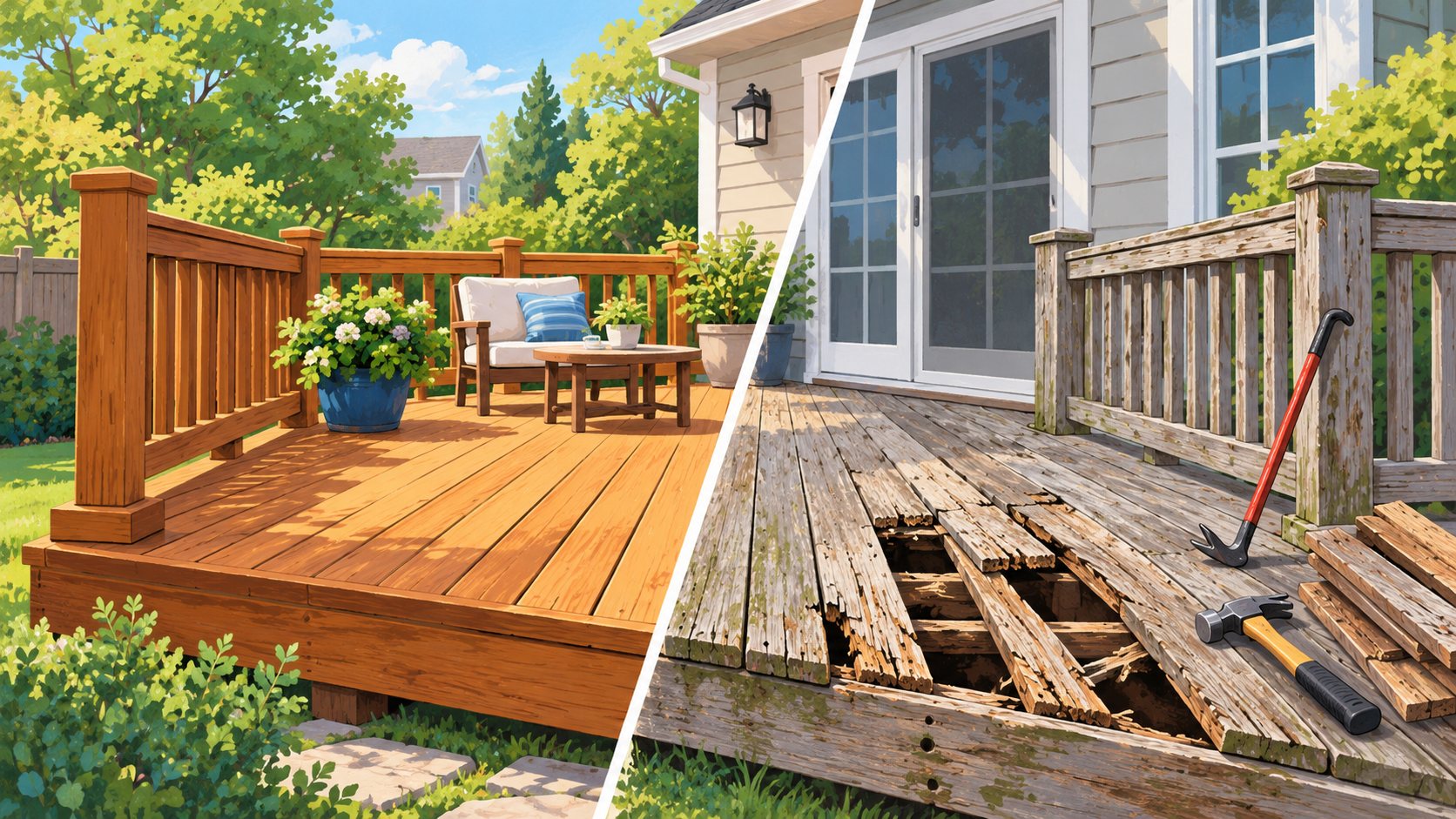
Homeowners call us two ways about a tired-looking deck. Either “I think we need a whole new deck,” or “can you just make this look better.” More often than either one expects, the honest answer is somewhere in between, and getting that call right saves real money.
More than 50 years of doing this in the East Bay has taught us the difference is usually easy to spot, if you know where to look.
Start with the structure, not the color
A deck’s structural wood, the joists and posts underneath, is a different question entirely from the decking boards you actually walk on. Fading, graying, and surface roughness on the boards themselves is almost always cosmetic. Soft or spongy wood when you press a screwdriver into it, especially near posts or where the deck meets the house, is structural, and that is a repair or rebuild question, not a staining one. The same screwdriver test works on trim and fascia; our article on exterior paint problems covers soft wood on the house itself.
Walk the deck and check these specific spots before deciding anything:
- Where deck boards meet the house (moisture collects here first)
- The base of every support post
- Areas that stay shaded and damp longer after rain
- Any spot where you have noticed give or bounce underfoot
If none of these show soft wood, you are very likely looking at a staining and repair job, not a replacement.
What a real refinishing job actually involves
Staining a deck that has been neglected for a few years is not a weekend pressure-wash-and-slap-on-stain job, even though that is how it often gets sold. Done right, it includes:
- Pressure washing to remove graying, mildew, and loose fibers
- Sanding rough or splintering areas smooth
- Replacing any individual boards that are cracked or damaged, without redoing the whole deck
- Applying a penetrating stain matched to the wood species and sun exposure
- Sealing to protect against the next season of weather
That process brings back decks that looked ready for the dumpster.
When replacement is actually the right call
We tell people to replace, not repair, when the structural framing itself has failed, not just the surface boards. Widespread soft wood at multiple posts, sagging that a few new boards will not fix, or a deck that was undersized or poorly built to begin with are all real replacement signs. Replacing framing piecemeal while trying to save money usually costs more in the long run than doing it right once.
The honest starting point
If you are not sure which situation you are in, that is exactly what a real inspection is for. We will tell you plainly if your deck can be brought back to life with staining and repair, or if it genuinely needs to come out. We would rather give you an accurate answer than the answer that gets us a bigger job. We look at decks, porches and fences across the East Bay, including Lafayette, Alamo and Walnut Creek.